I was in a tiny, eight-seat izakaya in Tokyo, a place so focused on doing one thing perfectly that its menu was just a few items. The master, a man whose hands moved with a quiet, practiced grace, was making his version of a Teriyaki Chicken Bowl. He wasn’t just grilling chicken and pouring sauce on it. He was performing a ritual. He’d sear the chicken, then spoon a small amount of a dark, glistening sauce over it. It wouldn’t just coat the chicken; it would shimmer and tighten into a thick, lacquered glaze in seconds. He did this two, maybe three times.

I asked him, through a friend, what his secret was. He just smiled and said, “Teriyaki is not a sauce. It is a verb. It is the act of shining.” In that moment, I understood. Most Western versions of this dish are a pale imitation. They’re just chicken with a sweet, salty sauce. But true teriyaki is a cooking method. It’s the art of creating a beautiful, glossy, caramelized glaze that clings to the protein and amplifies its flavor.
After years of studying and working with Japanese cuisine, I can tell you that a truly great teriyaki chicken bowl recipe is not about a list of ingredients. It’s about understanding the soul of the glaze and the art of the bowl. This guide is your masterclass. We’re going to deconstruct the verb of teriyaki and learn how to build a bowl that is not just a meal, but a perfectly composed work of art.
The Soul of the Glaze: Deconstructing True Teriyaki
Let’s kill the biggest myth right now. Teriyaki is not just soy sauce and sugar. That’s a simple sweet and salty sauce. A traditional teriyaki is a sacred balance of four key ingredients, each with a critical role. This is the difference between a home kitchen attempt and the flavor you get at a high-end restaurant or even a quality place like Panda Express (which, for a fast-casual chain, actually does a decent job of adhering to the core principles).
| Ingredient | The Role | The Insider’s Choice |
|---|---|---|
| Soy Sauce | The Salty/Umami Base. Provides foundational saltiness and deep savory flavor. | Use a high-quality Japanese koikuchi shoyu (dark soy sauce). It has a richer, less harsh flavor and a beautiful color than standard Chinese soy sauce. |
| Mirin | The Sweetness & Sheen. A sweet Japanese rice wine that provides a gentle, complex sweetness and is the key to creating that glossy, lacquered finish. | This is non-negotiable. Do not substitute with sugar or a sweet wine. Hon mirin (true mirin) has the highest alcohol content and best flavor. |
| Sake | The Flavor Enhancer & Aroma. Adds depth and complexity that sugar and soy alone cannot provide. The alcohol also helps cook off faster, creating a better glaze. | Use a decent-quality junmai or honjozo sake. Avoid “cooking sake,” which is often just salted water and alcohol. |
| Sugar | The Caramelization Agent. Balances the saltiness of the soy and helps the glaze thicken and caramelize to a beautiful brown. | Use a mix of granulated sugar for upfront sweetness and a pinch of dark brown sugar for a deeper molasses note and color. |
A Panera Teriyaki Chicken Bowl or other Western interpretations often skip the sake entirely and use corn syrup for sweetness and viscosity. This is why they can taste one-dimensional and overly sweet. The combination of soy, mirin, and sake creates a flavor that is layered, complex, and authentically Japanese. This four-ingredient balance is the heart of the verb “to shine.”
The Art of the Bowl: The Five Layers of Composition
A great bowl is not just a pile of food. It’s a composition. It’s an edible landscape designed to give you a perfect bite every time. Just like with other bowl dishes, I build my Teriyaki Chicken Bowl using a five-layer framework. This ensures a balance of texture, temperature, and flavor.
| Layer | The Function | The Insider’s Philosophy |
|---|---|---|
| 1. The Foundation (The Grain) | Provides substance and a neutral base for the other flavors. | Don’t just use plain white rice. Use Japanese short-grain rice, cooked properly and seasoned with a pinch of salt. For a healthy teriyaki chicken bowl, mix in some quinoa or use brown rice for a nuttier, fiber-rich base. |
| 2. The Structure (The Protein) | The star of the show. The canvas for your glaze. | Use boneless, skinless chicken thighs. They have more fat and flavor, making them juicier and more forgiving than breasts. Slice them against the grain for maximum tenderness. |
| 3. The Fiber & Nutrients (The Vegetables) | Provides color, crunch, and nutritional value. | Every bowl needs a mix of cooked and raw vegetables. Blanch some broccoli or sugar snap peas for a bright green, tender-crisp element. Add a handful of shredded raw carrots for a fresh, crunchy contrast. |
| 4. The Accent (The “Wow” Factor) | A sharp, pungent counterpoint that cuts through the richness of the glaze. | This is the secret weapon. Quick-pickled ginger (gari) or a small amount of beni shoga (red pickled ginger) is the classic choice. Its sharp, spicy-sweet acidity is the perfect palate cleanser. |
| 5. The Garnish (The Final Touch) | Adds aroma, texture, and visual appeal. | Toasted black and white sesame seeds and thinly sliced scallions. Non-negotiable for a professional finish. |
This framework turns your meal from just “chicken and rice” into a thoughtful, satisfying, and beautiful experience. It’s what separates a home cook from a chef.
The Blueprint: The Master Recipe for Teriyaki Chicken Bowl
Now that you understand the soul of the glaze and the art of the bowl, here is the blueprint. This is not just a recipe; it’s an application of the principles you’ve just learned.
Yields: 2 servings
Prep Time: 15 minutes
Cook Time: 20 minutes
The Glaze:
- 1/4 cup koikuchi shoyu (dark Japanese soy sauce)
- 1/4 cup hon mirin
- 2 tbsp sake
- 1 tbsp granulated sugar
- 1 tsp dark brown sugar
The Bowl Components:
- 1 lb boneless, skinless chicken thighs, sliced against the grain into 1/2-inch strips
- 2 cups cooked Japanese short-grain rice
- 1 cup broccoli florets, blanched
- 1/2 cup shredded carrots
- 2 tbsp quick-pickled ginger (store-bought is fine)
- 1 tsp toasted sesame seeds
- 1 scallion, thinly sliced
The Method:
- Make the Glaze: Combine all glaze ingredients in a small saucepan. Bring to a simmer over medium heat, whisking until the sugar is completely dissolved. Let it simmer gently for 2-3 minutes to slightly reduce and meld the flavors. Do not let it boil over.
- Cook the Chicken: Pat the chicken strips completely dry. Season lightly with salt and pepper. Heat a tablespoon of neutral oil in a large skillet over medium-high heat. Sear the chicken in a single layer until deeply browned on one side, about 3 minutes. Don’t crowd the pan; cook in batches if necessary.
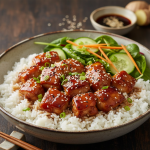
- The Verb – “To Shine”: Flip the chicken. Turn the heat down to medium-low. Pour about a quarter of your glaze over the chicken. It will bubble and thicken immediately. Toss the chicken to coat. As the glaze tightens, add another small splash. Continue this process of adding small amounts of glaze and tossing until the chicken is cooked through and coated in a beautiful, thick, lacquered glaze. This should only take another 2-3 minutes.
- Assemble the Bowl: Fluff your warm rice and place a generous bed in the bottom of each bowl. Arrange the glazed chicken on top. Artfully place the blanched broccoli and shredded carrots around the chicken. Add a small spoonful of pickled ginger to the side. Garnish with a sprinkle of toasted sesame seeds and the sliced scallions.