That single lesson was my true culinary school graduation. It taught me that a great Asian fried rice is not a recipe; it’s a system. It’s a deep understanding of your ingredients, especially the rice, and a dance with fire. Most home cooks fail because they start with “happy” rice—warm, freshly made, and full of moisture. This is the foundational error that leads to a mushy, greasy mess. This guide is your masterclass. I’m not just giving you an Asian fried rice recipe. I’m giving you the principles, the framework, and the secrets that will allow you to create perfect fried rice every single time, no recipe needed.
The Foundation: The Science of “Thirsty” Rice
Before we even talk about fire or sauce, we must address the star of the show: the rice. This is the single most important element, and the most misunderstood. The secret is not a type of rice; it’s the age of the rice.
You must use day-old, cooked rice that has been refrigerated, uncovered.
Why? It’s a simple scientific principle called starch retrogradation. When you cook rice, the starch granules absorb water and swell up, becoming soft and sticky. As the rice cools, these starches slowly recrystallize and firm up, expelling the water they absorbed. This process is what makes leftover rice firm and dry.
- Fresh, Hot Rice (“Happy Rice”): Starches are swollen with water. When you add it to a hot wok, it releases all that moisture, steaming instead of frying. The result is a mushy, gummy, and broken texture.
- Day-Old, Cold Rice (“Thirsty Rice”): Starches are firm and have expelled most of their moisture. When it hits the hot wok, it’s “thirsty.” It quickly absorbs the flavorful oil and sauce without releasing steam. Each grain remains distinct, firm, and individual.
This is why searching for an “asian fried rice near me” is so often disappointing. Most restaurants, especially fast-casual ones, use freshly made rice because it’s easier. The result is the sad, greasy fried rice we’ve all come to accept.
The Insider’s Rule: Make a big batch of rice a day or two before you plan to make fried rice. Spread it on a baking sheet to cool quickly, then refrigerate it in an uncovered container. This is the non-negotiable first step to the best Asian fried rice recipe you’ll ever have.
The Flavor Architecture: The Five Pillars of Seasoning
Now that you have your perfect, thirsty rice, you need to build a flavor profile. Most people just splash soy sauce into the wok. This is a mistake. It burns instantly and creates a harsh, salty taste. A great fried rice sauce is a balanced, pre-mixed elixir.
I think of it in five pillars. Every classic fried rice, whether it’s Chinese, Thai, or Japanese, is a variation on these five pillars.
| Pillar | Function | Classic Choices | The Insider’s Take |
| :— | :— | :— |
| 1. The Salty/Umami Base | The foundational savory note. | Light Soy Sauce, Oyster Sauce, Fish Sauce, Tamari. | Use light soy for salt and aroma. Oyster sauce adds viscosity and a deep, briny sweetness. |
| 2. The Aromatic Heat | The “nose” of the dish. Provides pungent warmth. | Mincled Garlic, Ginger, White Pepper. | Add your aromatics to the hot oil before anything else to “bloom” them and infuse the oil. White pepper is a classic Chinese fried rice seasoning that provides a different heat than chili. |
| 3. The Sweetness | Balances the salt and enhances caramelization. | Sugar, Mirin, Honey. | A tiny bit of sugar is non-negotiable. It balances the salt and helps the rice get that beautiful, slightly brown, toasted color. |
| 4. The “Golden” Color | Provides that appetizing amber-brown hue. | Dark Soy Sauce, Caramel Coloring, Mushroom Soy Sauce. | Dark soy is primarily for color and a deep, molasses-like flavor. A little goes a long way. |
| 5. The Finish | Adds a final layer of richness and freshness. | Toasted Sesame Oil, Sliced Scallions, Cilantro. | Drizzle toasted sesame oil off the heat at the very end to preserve its nutty aroma. |
This framework is your Asian fried rice seasoning blueprint. To make your sauce, simply mix ingredients from each pillar in a small bowl before you even start cooking. For a classic Chinese-style fried rice, you might mix: 2 tbsp light soy, 1 tsp dark soy, 1 tsp sugar, 1 tsp oyster sauce, and 1/2 tsp white pepper.
The Dance of the Wok: The Unforgiving Rhythm
With your thirsty rice and your pre-mixed sauce, you’re ready for the main event. Wok cooking is about speed and heat. It’s a rhythm. Hesitation is your enemy. This is what I call the “Mise en Place” for fried rice. Everything must be prepped and within arm’s reach.
- The Heat (Wok Hei): Get your wok screaming hot. It should be just starting to smoke. This is crucial for creating wok hei—the “breath of the wok.” This is the smoky, complex flavor that you can only get from a carbon steel wok at high heat.
- The Oil & Aromatics: Add a high-smoke-point oil (like canola, grapeseed, or peanut). Swirl to coat. Immediately add your minced garlic and ginger (Pillar 2). Stir for 10-15 seconds until you can smell them. They should not brown.
- The Protein: Add your cooked protein (char siu, shrimp, diced chicken) and spread it in a single layer. Let it sear for 30 seconds to get a little color, then toss.
- The Vegetables: Add your harder vegetables first (carrots, corn) and softer ones later (peas). Stir-fry for 1-2 minutes until they are crisp-tender.
- The Rice: Add your cold, thirsty rice. Break it up with your spatula. Toss it constantly to coat every grain in the flavorful oil. This is the most vigorous part of the dance.
- The Sauce: Push the rice up the sides of the wok, creating a well in the center. Pour your pre-mixed sauce (Pillars 1, 3, 4) into the well. Let it bubble and caramelize for 15 seconds before tossing it through the rice. This prevents it from burning.
- The Finish: Turn off the heat. Add your final garnishes (Pillar 5)—the toasted sesame oil and scallions. Give it one last toss and serve immediately.
The Blueprint: A Master Recipe for Classic Chinese Fried Rice
This is not just a recipe; it’s the application of all the principles we’ve discussed. This is the ultimate how to make Asian fried rice guide.
Yields: 2-3 servings
Prep Time: 15 minutes
Cook Time: 5 minutes
Components:
- 3 cups cold, day-old cooked long-grain rice
- 1 cup diced char siu (Chinese BBQ pork) or cooked shrimp
- 1/2 cup mixed frozen peas and carrots
- 2 eggs, lightly beaten
- 3 tbsp high-smoke-point oil
- 2 cloves garlic, minced
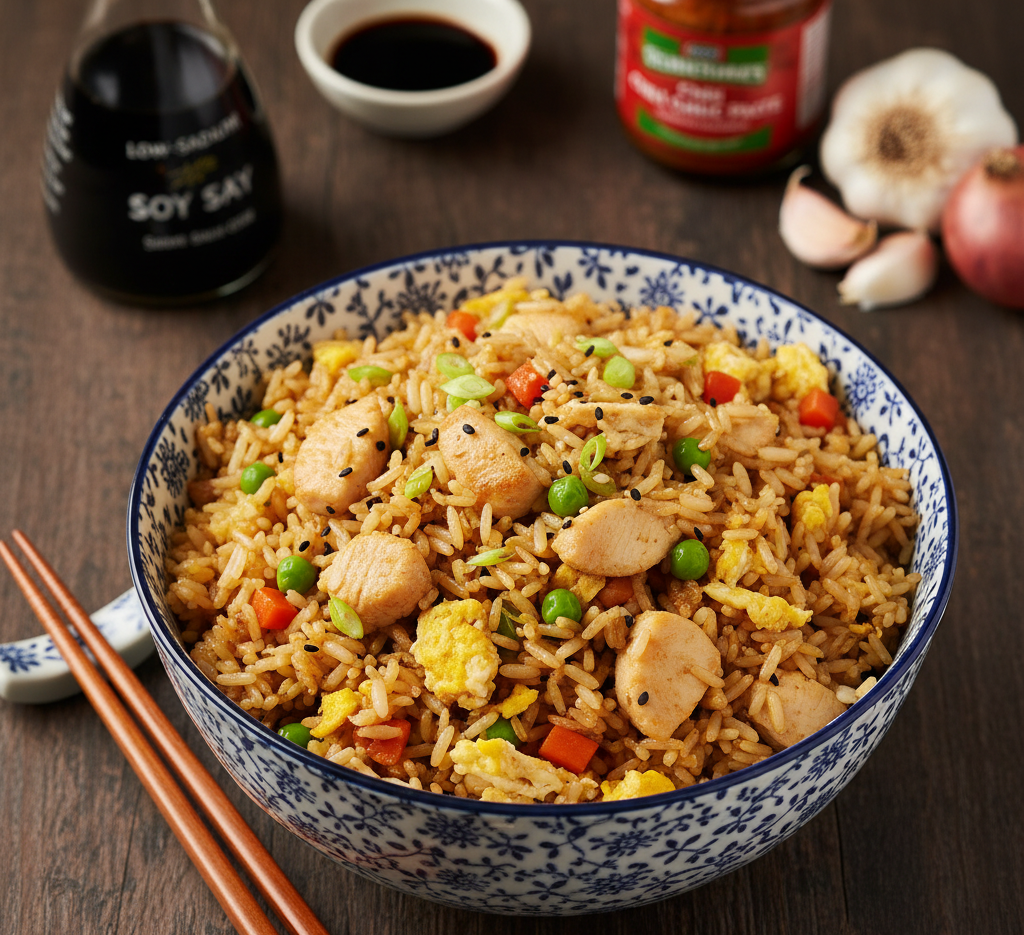
- The Sauce: In a small bowl, mix 2 tbsp light soy sauce, 1 tsp dark soy sauce, 1 tsp sugar, 1 tsp oyster sauce, and 1/2 tsp white pepper.
- The Finish: 1 tsp toasted sesame oil, 2 sliced scallions.
The Method (The Dance):
- Set all your components by the wok. Heat your wok until smoking.
- Add 1 tbsp oil. Swirl. Add the eggs and scramble quickly until just set. Remove from wok and set aside.
- Add the remaining 2 tbsp oil. Swirl. Add the garlic and bloom for 10 seconds.
- Add the char siu and sear for 30 seconds. Add the frozen vegetables and stir-fry for 1 minute.
- Add the cold rice. Toss vigorously for 1 minute to coat and separate the grains.
- Push rice to the sides. Pour the sauce into the center well. Let it bubble, then toss everything together. Add the scrambled eggs back in and toss to break them up.
- Turn off the heat. Drizzle with sesame oil and toss with scallions. Serve immediately.
What Makes It “Asian”? A Final Word on Philosophy
You might see a recipe for a “non Asian fried rice” and wonder what the difference is. The difference isn’t the ingredients. You can make fried rice with quinoa, cauliflower, or any grain. The difference is the philosophy and the technique.
What makes a fried rice truly “Asian” is the system we’ve just learned:
- The reverence for day-old, “thirsty” rice.
- The balanced flavor architecture of the five pillars.
- The high-heat, rhythmic dance of the wok.
- The pursuit of wok hei.
It’s a culinary tradition that values texture, balance, and the transformative power of fire. Now you are no longer just following a recipe. You understand the soul of the dish. You have the principles. So go find some leftover rice, let it get thirsty, and go create your own perfect fried rice. Your wok is waiting.