After six years deep inside the Korean food industry—running R&D kitchens, consulting with BBQ houses in Seoul and Los Angeles, and eating enough marinated beef to ruin multiple shirts—I can tell you this: Korean bulgogi looks deceptively simple, but it’s one of the most technically layered dishes in East Asian cuisine.
To outsiders, it’s “Korea’s answer to teriyaki.” To insiders, it’s a culinary dialect of fire, enzyme science, and social performance. Bulgogi isn’t just grilled beef; it’s the taste of refinement hidden behind home-style comfort.
This expert-level breakdown goes beyond recipes. You’ll leave knowing why bulgogi tastes the way it does, how modern restaurateurs tweak tradition to scale it globally, and how to recreate that whispering sweetness of Seoul street smoke in your kitchen.
What Is Korean Bulgogi? Everything You Need to Know
Let’s clarify—because unless you’ve eaten bulgogi in both a Seoul pojangmacha (street tent) and a fine-dining space in Itaewon, you haven’t seen its full spectrum.
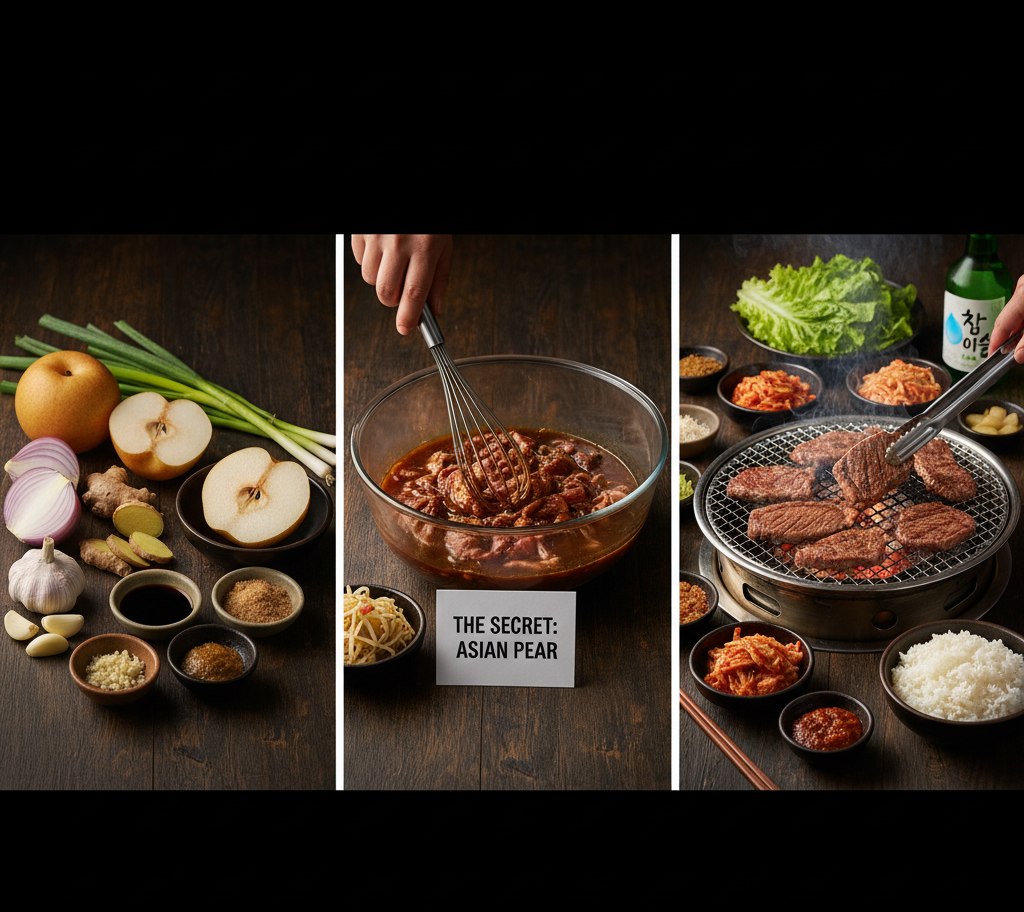
Korean bulgogi literally means fire meat—from bul (fire) and gogi (meat). It’s thinly sliced beef—usually ribeye, sirloin, or brisket—marinated in a blend of soy sauce, sugar, Asian pear, garlic, sesame oil, and sometimes onion juice. Traditionally grilled over charcoal, modern versions hit either gas barbecues or sizzling cast iron plates.
Unlike Western BBQ—where smoke defines the identity—bulgogi is about balance. The sweetness is never syrupy, the saltiness never harsh. It’s tender, translucent, and glossy—more silk than steak.
When you walk into a Seoul BBQ restaurant and hear that sharp hiss as marinated beef lands on metal, that’s the sound of centuries compressing into a single flavor moment.
So what is Korean bulgogi really? It’s sweetness, fire, and aroma engineered into harmony.
Korean Bulgogi Explained: History, Ingredients, and Traditional Cooking
From Royal Feast to Salaryman’s Lunch
Bulgogi traces its lineage to maekjeok, a beef skewer dish from Goguryeo (37 BCE – 668 CE). It evolved across dynasties: from speared meat grilled in royal courts, to the pan-fried versions of the 20th century that fueled urban office workers.
During Korea’s modernization in the 1960s, beef prices dropped and home refrigeration spread. Bulgogi migrated from banquet tables to dining rooms. Charcoal grills were replaced by tabletop burners—and the era of participatory Korean BBQ was born.
You don’t “order” bulgogi. You cook it together, flip it, wrap it, talk over the smoke.
That intimacy is why it thrived.
Core Ingredients—and Why Each Matters
| Component | Purpose | Insider Tips |
|---|---|---|
| Beef (Ribeye or Sirloin) | Core texture | Slice when half-frozen to 2–3 mm precision; preserves juiciness |
| Soy Sauce | Umami base | Brewed soy (진간장, Jin–ganjang) adds mellower salinity |
| Asian Pear Puree | Tenderizer + sweetness | Its enzymes act like natural bromelain; never skip if authentic texture matters |
| Sugar + Mirim (sweet cooking wine) | Caramel tones | Combine with grated onion for complexity |
| Garlic + Scallion | Aromatic foundation | Balance garlic sharpness with raw scallion sweetness |
| Sesame Oil + Seeds | Finish & nutty aroma | Always stir in post‑marination to prevent rancid oxidation |
| Black Pepper | Mild spice lift | Fine grind prevents visual muddying on cooked strips |
Each ingredient tells part of the flavor story; take one out, and the narrative collapses.
Traditional Cooking: Charcoal, Fire, and Control
The best Korean bulgogi recipe begins on sutbul (charcoal made from oak or chestnut wood). Real Korean grill masters talk about fire personality: every charcoal batch burns differently.
We look for orange coals without open flame, because bulgogi’s sugars ignite fast. High radiant heat browns sugar molecules in seconds; you get that perfect mahogany sheen without black bitterness.
Tastewise: charcoal gives a faint whisper of smoke—never the heavy mesquite blast of American BBQ. Bulgogi’s smoke should tease the nose, not punch it.
Everything About Korean Bulgogi: From Street Food to Gourmet Meals
One of the most fascinating things about bulgogi is its adaptability. It exists at every level of Korean dining culture.
- Street Vendors: Serve bulgogi‑inspired skewers (bulgogi‑tteokkochi)—beef layered with chewy rice cakes. Quick‑marinated, sweet, flame‑kissed.
- Family Restaurants: Offer bulgogi in stone bowls with noodles or rice. Accessible, comforting, repeatable.
- Gourmet Kitchens: Reinterpret bulgogi through reduction sauces, truffle oil, or sous‑vide beef for Michelin clientele.
In 2017, while consulting for a Seoul fusion spot, we developed deconstructed bulgogi ravioli. We filled handmade pasta with lightly marinated sirloin, then glazed it with reduced soy‑pear demiglace. Guests recognized the aroma before even identifying the ingredients. That’s how culturally coded bulgogi has become—it transcends format.
Korean Bulgogi: Sweet, Savory, and the Iconic Korean BBQ Dish
Ask any Korean abroad what food tastes most like home, and nine out of ten will say “bulgogi.” It’s emotional infrastructure, not just flavor.
What separates bulgogi from other Korean BBQ styles (like galbi or samgyeopsal) is its balance of savor and melody:
- Galbi sings low—deep, marrowy sweetness.
- Samgyeopsal shouts—fat‑on‑fire euphoria.
- Bulgogi hums—the perfect harmony between salt, sugar, and aroma.
Good bulgogi doesn’t shout; it resonates.
When properly marinated, the surface glistens as though the sauce has fused with meat fibers. Sear it, and it releases a scent of toasted soy and candied garlic that practically announces dinner three blocks away.
The Science Behind Korean Bulgogi Marinade
Let’s get technical—for industry professionals, this chemistry is the essence of mastery.
The Korean bulgogi marinade functions as a biotic tenderizer and a Maillard accelerator.
When marinated beef meets high heat:
- Sugars caramelize between 140–165°C (285–330°F).
- Amino acids react with sugars, producing pyrazines (the savory‑sweet Brown flavor note).
- Sesame oil acts as an aromatic lipid carrier, binding volatile compounds.
The Asian pear introduces proteolytic enzymes that unzip connective tissues. Think of it as a natural version of industrial tenderizers—but softer, subtler.
Inside R&D kitchens, we even measure Brix (sugar concentration) and pH of marinade batches to ensure reproducibility across franchises. That’s how precise contemporary Korean food manufacturing has become.
| Variable | Ideal Range | Influence |
|---|---|---|
| Brix | 18–24 | Higher values risk stickiness; lower dull sweetness |
| pH | 5.5–6.0 | Preserves natural beef color while optimizing tenderness |
| Marination Time | 6–12 hours | Over 24 hours leads to mushy texture |
That’s professional flavor calibration in numerical form.
How to Make Korean Bulgogi at Home (Step-by-Step Recipe)
You don’t need restaurant-level tools to nail this dish. You need sensitivity to heat and timing.
Ingredients (Serves 4)
- 1 lb (450 g) ribeye or sirloin, thin‑sliced
- 1 Asian pear (pureed)
- ½ cup naturally brewed soy sauce
- 2 tbsp brown sugar
- 1 tbsp mirin (optional)
- 4 cloves garlic, minced
- 1 small onion, grated
- 2 tsp sesame oil
- ½ tsp black pepper
- 2 green onions, chopped
- Toasted sesame seeds, for garnish
Instructions
- Slice the Beef: Half‑freeze it 30 minutes, then slice cross‑grain into thin ribbons.
- Blend the Marinade: Combine all ingredients except sesame oil; stir until sugar dissolves.
- Add Beef and Oil: Coat evenly, add sesame oil last, toss gently.
- Marinate 8–12 hours: Refrigerate. Flip once midway for even absorption.
- Grill or Pan: Cook on preheated cast‑iron or BBQ grate over medium‑high. Avoid crowding.
- Finish: When edges crisp and juice caramelizes, remove and rest 30 seconds.
- Serve: With steamed rice, kimchi, and lettuce wraps (ssam).
Pro tip: drizzle leftover marinade into the hot pan post‑grilling, reduce for 30 seconds, then pour over beef. It’s instant glaze—restaurant standard.
Easy Korean Bulgogi Recipe for Juicy, Flavor-Packed Meat
If you’re working with limited prep time, the Korean bulgogi ground beef version delivers similar payoff at half the effort. It’s also a favorite in the meal‑kit world because it scales production easily.
Here’s how chefs streamline it:
- Brown 1 lb ground beef in sesame oil until half‑cooked.
- Add a quick marinade mixture (soy, garlic, sugar, pear juice, green onions).
- Simmer 3–4 minutes; juice should reduce until glossy.
- Serve over rice with fried egg and shredded seaweed = instant Korean bulgogi bowl.
Even at high-end cafés in Seoul, ground-beef bulgogi bowls are trendy. They align with the global “comfort + convenience” hybrid era, proving how timeless flavors thrive under new efficiencies.
The Secret to Perfect Korean Bulgogi Marinade Every Time
Let me reveal the formula I’ve used across multiple restaurants, tested hundreds of times for replicability:
Base Flavor Pyramid (By Weight Ratio):
| Element | Ratio | Sensory Role |
|---|---|---|
| Soy Sauce | 1.0 | Salinity + depth |
| Sugar (white/brown mix) | 0.5 | Browning + sweetness |
| Pear + Onion Puree | 0.7 | Tenderization + fruity lift |
| Garlic + Ginger | 0.15 | Aromatic high‑note |
| Sesame Oil | 0.1 | Roundness |
| Mirin or Rice Wine | 0.1 | Acid‑sweet bridge |
You can scale this mathematically across batch sizes. Professional kitchens literally program these coefficients into recipe costing software to maintain sensory uniformity across 20+ outlets.
Korean Bulgogi Sauce: The Chef’s Hack
Many home cooks ask: “Why doesn’t my bulgogi taste glossy and cohesive like in restaurants?” Answer: finishing sauce.
After grilling, chefs often brush a secondary reduction—a combination of soy, rice syrup, scallion, and drippings—onto the meat right before plating. It thickens through residual pan heat, giving that restaurant-level sheen.
An insider’s hack: whisk a teaspoon of doenjang (fermented soybean paste) into the reduction for a deeper, earthy undernote. You’ll never go back.
Korean Bulgogi Bowl: The Gateway Dish for Newcomers
In fast-casual circles, the Korean bulgogi bowl is to modern Korean dining what the burrito bowl was to Mexican cuisine—an entry portal.
Layered yet fast to build:
- Steamed white rice (or noodles)
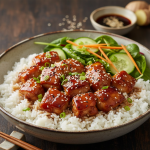
- Bulgogi beef (thin, caramelized)
- Pickled cucumbers or kimchi
- Fried egg
- Drizzle of spicy mayo or gochujang-yogurt sauce
This format dominates delivery and meal kits from New York to London because it converts the depth of Korean BBQ into an office-lunch setting. I’ve personally helped adapt several independent chains’ sourcing standards using frozen pre-marinated slices that thaw evenly for 2‑minute grill times.
That operational efficiency is why bulgogi has quietly become Korea’s soft‑power ambassador on global menus.
Pairings and Serving Philosophy
Best Carbohydrate Pairings:
- White rice: amplifies marinade umami.
- Sweet potato noodles (dangmyeon): for bulgogi‑style japchae.
- Lettuce wraps: freshness resets palate.
Sidekicks that Matter:
- Kimchi: Microbial brightness vs. fatty sweetness.
- Pickled radish: Acid cuts grease.
- Doenjang soup: Earthy broth anchors the meal rhythm.
Drinks:
- Soju complements sweetness with ethanol bite.
- Makgeolli (rice wine) adds creamy balance to spicy side dishes.
Flavor theorists call this “contrast dining.” Koreans have intuitively perfected it for generations.
Modern Interpretations: Bulgogi in the 21st Century
The future of Korean bulgogi is hybrid.
- Plant-Based Bulgogi: Soy protein marinated in identical enzymes + smoke extract for texture mimicry. Some Seoul cafes now offer tofu or mushroom bulgogi indistinguishable in aroma from beef.
- Bulgogi Burgers: Fast-food chains like Lotteria pioneered them in Korea, now appearing globally. Bulgogi sauce becomes glaze for patties—a sweet-savory flavor bridge.
- Fine-Dining Elevation: Chefs apply sous-vide precision for uniform tenderness, finishing on binchotan charcoal for “controlled rusticity.”
During my stint consulting for a Michelin-listed kitchen in Busan, we ran blind tastings between traditional charcoal bulgogi and sous-vide reheated versions. Guests rated the latter higher for juiciness—but nostalgia skewed judgments toward the charred aroma. Lesson? Bulgogi’s core appeal is emotional, not just chemical.
Why Bulgogi Endures
Despite shifting tastes and health trends, bulgogi holds its ground because it speaks to balance and belonging. Through history, it adapted without losing essence:
- From royal banquets to plastic street stalls.
- From charcoal flames to induction burners.
- From beef purism to vegan alternatives.
It offers comfort without heaviness, simplicity without boredom.
When Koreans abroad crave home, they don’t just crave soy-sugar marinade; they crave that communal act of listening to beef crackle while sharing stories over a grill. Bulgogi, in that sense, is cultural glue.
Final Insider Reflection
After years tasting, testing, and teaching, here’s what I tell every apprentice: The secret to great bulgogi isn’t in the pear, sugar, or soy. It’s in restraint.
Bulgogi rewards moderation—gentle sweetness, moderate heat, measured char. The goal isn’t to display flavor fireworks but to compose an edible harmony.