I was consulting for a fast-casual chain that wanted to add a “healthy bowl” section to their menu. The R&D team presented me with their creation: a sad, monochromatic pile of quinoa, a dry, grilled chicken breast, a few steamed broccoli florets, and a dollop of plain Greek yogurt on top. It was nutritionally adequate, I suppose. It was also profoundly depressing. It was a bowl of obligation, not a bowl of joy.
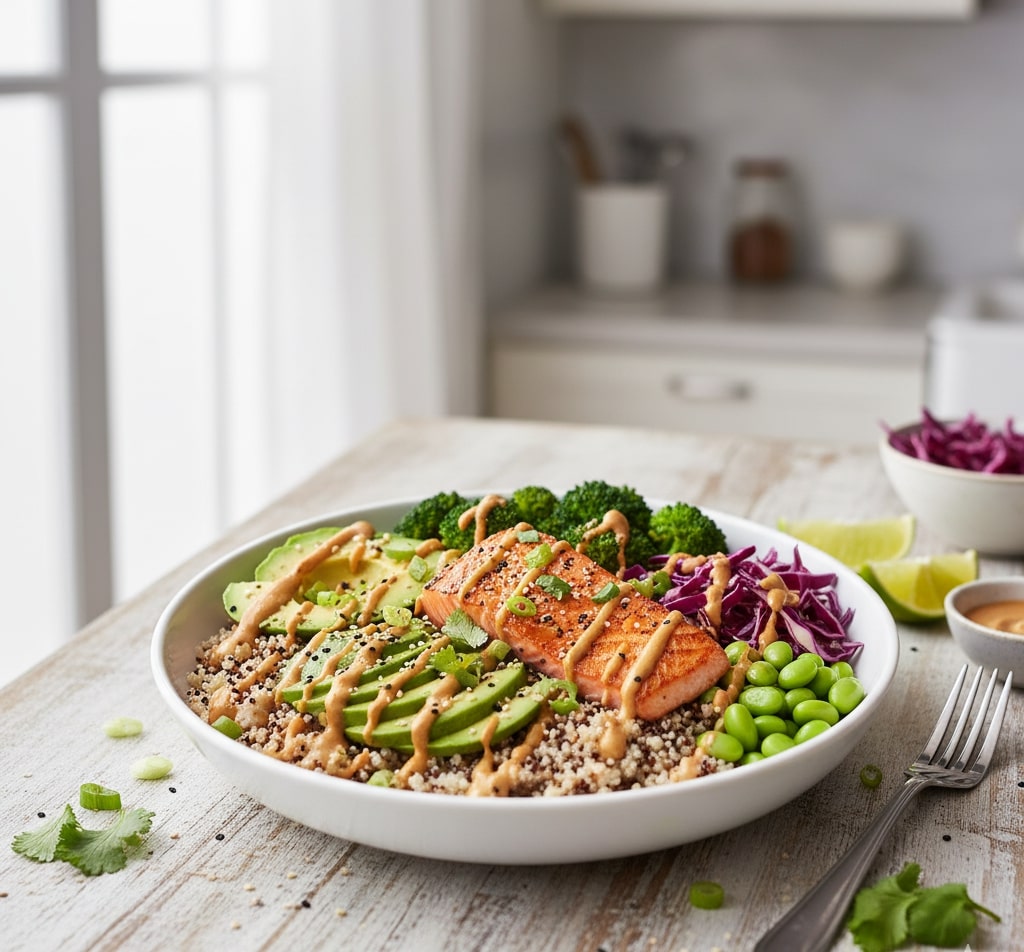
I told them, “You’re not building a bowl; you’re just stacking ingredients. A great bowl is a composition. It’s a tiny, edible landscape with texture, temperature, and flavor changes in every bite.” They looked at me blankly. This is the single biggest mistake I see in the world of healthy bowl recipes. People treat it like a checklist of “good” foods. Quinoa? Check. Chicken? Check. Avocado? Check.
This is not cooking; it’s assembly. And it’s boring. Today, I’m going to give you the framework that I gave them. I’m going to teach you to think like an architect, not a stock clerk. We’re going to deconstruct the art of the bowl so you can create your own best healthy bowl recipes—compositions that are not only nutritious but are so satisfying and delicious you’ll actually crave them.
The Blueprint: The Five Layers of a Perfect Bowl
Forget recipes for a moment. A truly great bowl, whether it’s for lunch, dinner, or a quick breakfast, is built on a five-layer architectural plan. Master these five layers, and you can mix and match ingredients infinitely based on what you have on hand.
| Layer | Function | The Insider’s Philosophy |
|---|---|---|
| 1. The Foundation (Grains/Legumes) | Provides complex carbohydrates for sustained energy and a textural base. | Don’t just use quinoa. Think farro, freekeh, black rice, or even lentils and chickpeas. The key is to cook them perfectly—in a flavorful broth, not just plain water. |
| 2. The Structure (Protein) | The building block for satiety and muscle repair. This is what makes the bowl a meal. | Go beyond grilled chicken. Think shredded slow-cooked pork, spiced roasted chickpeas, crispy tofu, or flaked salmon. The preparation method is as important as the protein itself. |
| 3. The Fiber & Nutrients (Vegetables) | The source of vitamins, minerals, and crucial textural contrast. | This is where you play with temperature and texture. Every great bowl needs a mix of cooked and raw vegetables. Roasted sweet potatoes for softness, raw shredded carrots for crunch, sautéed spinach for wilted tenderness. |
| 4. The Accent (Healthy Fats & Dressing) | Carries fat-soluble vitamins and provides immense satisfaction and flavor. | Ditch boring bottled dressings. A great “dressing” is often just a high-quality extra virgin olive oil, a squeeze of citrus, and a pinch of salt. Or a dollop of tahini mixed with lemon juice and water. |
| 5. The Garnish (The “Wow” Factor) | The final touch that adds a burst of freshness, texture, and aroma. | This is non-negotiable. It’s what makes the bowl feel special. Think toasted seeds, fresh herbs, pickled onions, a sprinkle of chili flakes, or everything bagel seasoning. |
This five-layer blueprint is your key. It ensures every bite is a complete experience. You’re not just getting a mouthful of quinoa. You’re getting a bit of soft grain, crisp vegetable, rich protein, tangy dressing, and a crunchy seed all at once.
The Secret Interplay: The Magic of Hot & Cold, Soft & Crunchy
Once you understand the five layers, you can unlock the next level of bowl architecture: the interplay of opposites. A bowl composed entirely of room-temperature ingredients is flat. A bowl that’s all hot and soft is mushy. The magic lies in the contrast.
- Hot vs. Cold: A warm grain and protein base with a cool, crisp salad on top is a life-changing experience. The temperature contrast wakes up the palate. A hot healthy bowl recipe for dinner might feature roasted salmon and warm farro, but it should be served with a handful of cold, crisp butter lettuce and a dollop of cool yogurt.
- Soft vs. Crunchy: This is the textural equivalent of hot vs. cold. A bowl needs crunch. If your foundation is soft quinoa and your protein is tender chicken, you must add something crunchy. Toasted almonds, raw bell peppers, roasted chickpeas, crispy shallots, or even seeds. This textural variety is what makes eating satisfying and prevents “palate fatigue.”
Every time you build a bowl, run through this checklist: “Do I have something hot? Do I have something cold? Do I have something soft? Do I have something crunchy?” If you’re missing one, your bowl will be good, but it won’t be great.
The Blueprints: Applying the Framework to Your Life
Now that you’re an architect, here are four blueprints for different scenarios, using the keywords you care about.
Blueprint 1: The High-Performance Lunch Bowl (High-Protein, Meal-Prep Friendly)
This is for the person who needs a powerful, satisfying lunch that will prevent a 3 PM slump and can be made ahead. This is a prime example of high protein healthy bowl recipes.
- Foundation: Quinoa, cooked in vegetable broth with a bay leaf.
- Structure: Shredded rotisserie chicken (the ultimate meal-prep hack) or a batch of lemon-herb roasted chickpeas.
- Fiber & Nutrients: A mix of raw spinach, chopped cucumber, and roasted sweet potato cubes (cooked in the same oven as the chickpeas).
- Accent: A simple dressing of tahini, lemon juice, water, and a pinch of cumin.
- Garnish: Toasted pumpkin seeds and fresh dill.