This is the great pork paradox. The secret to mind-blowing Korean BBQ at home isn’t a secret ingredient. It’s a fundamental shift in your entire approach—from the butcher’s block to the final, glorious bite.
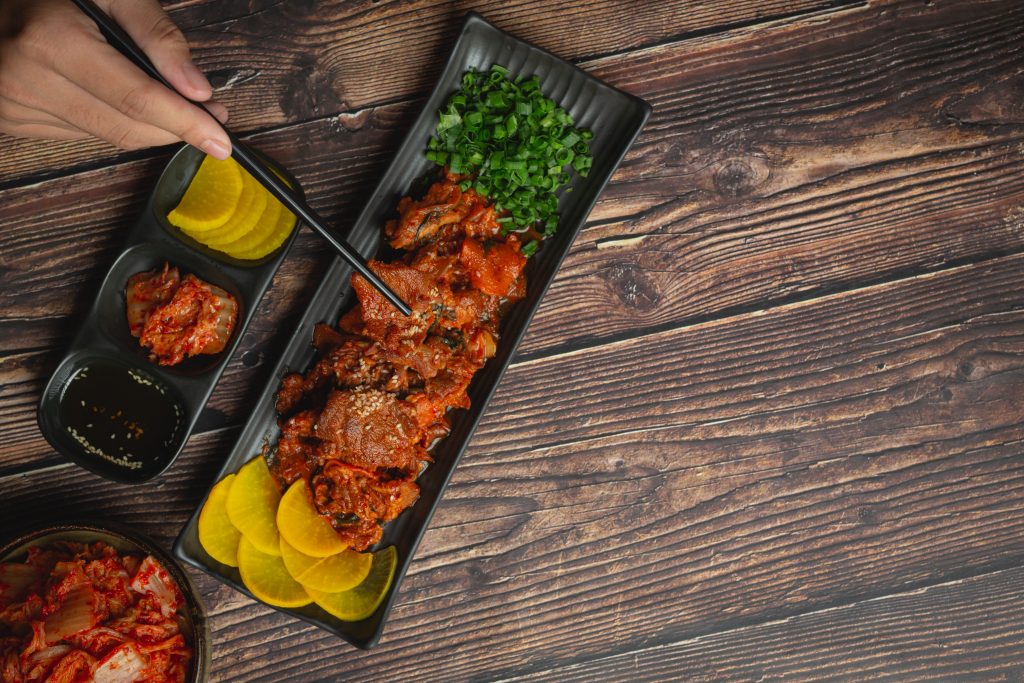
I’ve spent a lifetime chasing this flavor. I’ve worked the grill stations in bustling K-BBQ joints, where the air is thick with the intoxicating smoke of rendering pork fat and caramelized marinade. I’ve shared meals with Korean grandmothers (halmonis) who taught me that the real magic is in the balance and the quality of the ingredients, not the complexity. I’ve seen the common mistakes that turn a vibrant dish into a soggy, one-note disappointment.
Today, we’re going to dismantle the entire process. We’re not just following a recipe; we’re learning the why behind every step. We’re going to unlock the secrets to creating Korean BBQ pork that is so good, it will transport you straight to a noisy, wonderful restaurant in the heart of Seoul.
The Culture of Fire and Fellowship: Why K-BBQ is More Than Just a Meal
Before we even touch the meat, you need to understand the philosophy. In the West, barbecue is often a solo pursuit—one pitmaster tending a large smoker for hours. Korean barbecue (gogi-gui) is the polar opposite. It is communal, interactive, and fast. The grill is placed in the center of the table, and everyone participates in the cooking. It’s a loud, joyous, hands-on experience, fueled by soju and fellowship.
The food is designed for this environment. The cuts of meat are thin, so they cook in minutes. The marinades are potent, designed to deliver a massive flavor punch in a short amount of time. And the meal is never just about the meat. It’s a sprawling ecosystem of side dishes (banchan), dipping sauces (ssamjang), and fresh vegetables for wrapping (ssam).
When you understand this, you realize that your goal isn’t to just cook some pork. Your goal is to create an explosion of contrasting flavors, textures, and temperatures. The hot, fatty, savory pork is meant to be wrapped in a cool, crisp lettuce leaf with a dab of funky sauce and a sliver of raw garlic. That single, perfect bite—the ssam—is the entire point.
The Butcher’s Block: Your Most Important Decision
This is where 90% of home cooks fail. You cannot make great Korean BBQ pork with the wrong cut of meat. The lean, virtuous pork loin or tenderloin you think is a “healthy” choice is your worst enemy here. It has no fat, no collagen, and will turn into a dry, tough disaster the second it hits a hot pan.
| The Cut | The Role & Flavor Profile | Why It’s the Best Choice |
|---|---|---|
| Pork Belly (Samgyeopsal) | The Unctuous King. This is pure, unadulterated porky richness. The layers of fat render and crisp up, creating an incredibly decadent experience. It’s often served unmarinated, as its flavor is so powerful on its own. | For the pure, fatty, crispy pork experience. This is what you see in most K-dramas. A true Korean BBQ pork belly is a thing of beauty. |
| Pork Shoulder/Butt (Moksal) | The Versatile Workhorse. This is the ideal cut for marinated pork dishes like Dwaeji Bulgogi or Jeyuk Bokkeum. It has the perfect balance of lean meat and intramuscular fat. | The fat keeps the meat succulent and flavorful during the high-heat cooking, and the meat itself has a wonderful, tender chew. This is the cut you should be using for your marinade. |
| Pork Jowl (Hanjeongsal) | The Connoisseur’s Cut. This cut is prized for its unique, almost crunchy texture and incredible marbling. It’s rich like belly but has a firmer, more satisfying bite. | If you can find this at a Korean butcher, you are in for a treat. It’s a textural masterpiece. |
I once saw a customer at a Korean market arguing with the butcher, insisting on tenderloin for his Korean BBQ pork recipe. The butcher, a wise old man, simply held up a piece of pork shoulder, beautifully marbled, and said, “This is the flavor. That is just meat.”
The Slice is Everything: For marinated pork, the meat must be sliced paper-thin, about ⅛-inch thick. This does two critical things:
- It allows the potent marinade to penetrate quickly and deeply.
- It ensures the meat cooks in a matter of minutes, getting that perfect char before it has a chance to dry out.
- Pro Tip: Freeze your pork shoulder for 30-45 minutes. This firms up the meat, making it infinitely easier to get those wafer-thin, uniform slices.
The Marinade: Your Flavor Engine and Secret Tenderizer
The marinade is the soul of dishes like Dwaeji Bulgogi (pork “fire meat”). A great best Korean BBQ pork marinade is a carefully constructed symphony of sweet, savory, spicy, and aromatic notes. It’s not just for flavor; it actively tenderizes the meat.
The Core Components:
- The Spicy Engine (Gochujang & Gochugaru):
- Gochujang (Korean Chili Paste): This is the heart of any spicy Korean marinade. It’s not just heat; it’s a fermented, funky, slightly sweet, and deeply savory paste that adds incredible complexity.
- Gochugaru (Korean Chili Flakes): This provides a different kind of heat—a cleaner, brighter, often smoky spiciness that complements the deep funk of the gochujang. Using both is key.
- The Savory Backbone (Soy Sauce & Garlic):
- Soy Sauce: Provides the essential saltiness and umami foundation.
- Garlic & Ginger: This aromatic duo is non-negotiable. Use a generous amount of finely minced fresh garlic and grated ginger.
- The Sweet Tenderizer (The Secret Weapon):
- Grated Fruit: This is the secret that many home cooks miss. A few tablespoons of grated Asian pear, Fuji apple, or even onion adds a natural, complex sweetness that balances the heat. More importantly, the enzymes in the fruit (particularly the pear) act as a powerful natural tenderizer, breaking down the proteins in the pork for an unbelievably tender result.
The Master Marinade for Spicy Dwaeji Bulgogi:
For 1.5 lbs of thinly sliced pork shoulder:
- ¼ cup gochujang
- 2 tablespoons gochugaru (adjust to your spice preference)
- ¼ cup soy sauce
- 3 tablespoons grated Asian pear or Fuji apple
- 2 tablespoons mirin (sweet rice wine)
- 1 tablespoon sesame oil
- 6-8 cloves garlic, finely minced
- 1-inch piece of ginger, grated
- 2 green onions, thinly sliced
- 1 tablespoon sugar or honey (optional, depending on the sweetness of your gochujang and fruit)
- A generous amount of black pepper
The Method: Whisk all ingredients together in a large bowl. Add the thinly sliced pork and use your hands to massage the marinade into every nook and cranny of the meat. Let it marinate for at least 30 minutes, but for the best flavor, let it sit in the fridge for 4-8 hours.
The Execution: The Art of the Sear
You have your perfectly sliced, beautifully marinated pork. Do not ruin it by throwing it all into a non-stick pan. You will create a soupy, boiled mess.
The goal is a sear. You want the sugars in the marinade to hit a scorching hot surface and caramelize, creating a dark, smoky, slightly charred crust. This is where the magic happens.
Your Weapons of Choice:
- A Tabletop Grill: The most authentic way. A butane or electric grill at the center of the table is the ultimate K-BBQ experience.
- A Cast-Iron Skillet or Griddle: This is your best indoor option. Cast iron holds a tremendous amount of heat, which is essential for getting a good sear.
- An Outdoor Grill: Fantastic for getting a real charcoal flavor. Use a grill basket or a fine-mesh grill grate to prevent the thin slices from falling through.
The Technique: Don’t Crowd the Pan!
- Get it Screaming Hot: Preheat your cast-iron skillet over high heat. Add a thin layer of a neutral oil. It should be shimmering and almost smoking.
- Cook in Batches: Place the marinated pork in the pan in a single layer. Do not pile it up. You want to hear an aggressive, violent sizzle.
- The Sear is Sacred: Let it cook, untouched, for 1-2 minutes. You need to give it time to form a deep brown crust. This is not the time to constantly stir.
- Flip and Finish: Flip the pieces and cook for another 1-2 minutes on the other side until cooked through and beautifully charred in spots.
- Remove and Repeat: Transfer the cooked pork to a plate and repeat the process with the remaining batches.